
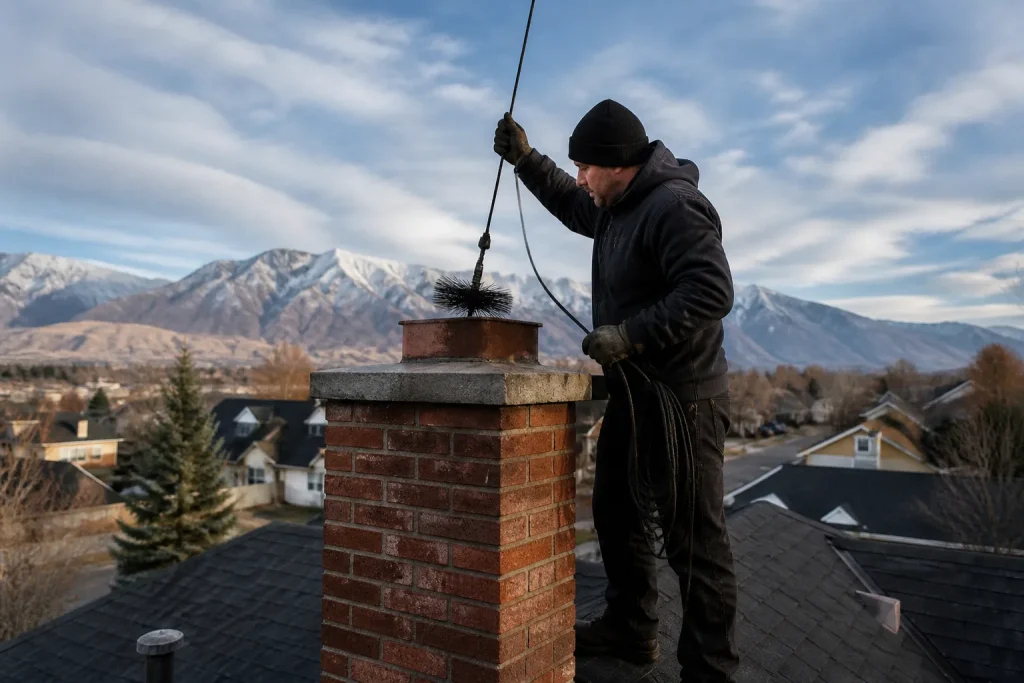
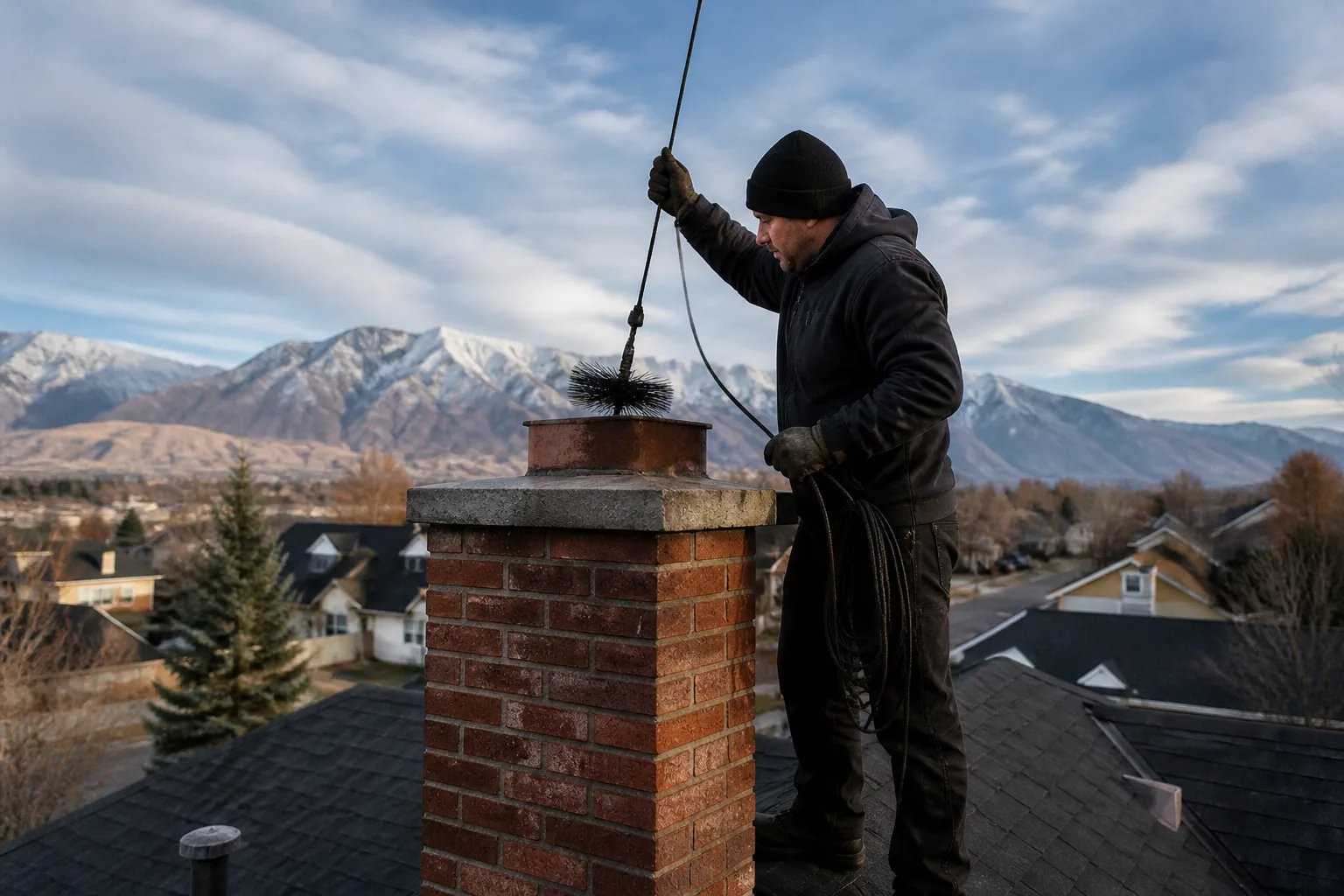
Chimney Sweep: Repair or Replace? How Salt Lake City Homeowners Decide
Most homeowners who ask us whether to repair or replace a chimney are looking at one broken part: a cracked crown, a spalling brick, a rusted damper. The honest answer is that the part is rarely the real question. In Salt Lake City, the decision turns on whether the masonry around that part can hold a repair through another decade of freeze-thaw cycling. A crown patched for a few hundred dollars can still lead to liner damage within a couple of winters if the structure underneath is already saturated. We’d rather you understood the structural picture before you spend anything. If you’d rather not sort through it alone, call (844) 443-4875 and we’ll walk you through it.
Key Takeaways
- Repair vs. replace depends on three things: the age of the failed part, the condition of the surrounding masonry, and the integrity of the flue liner.
- Salt Lake City’s elevation and freeze-thaw cycle punish masonry that has absorbed moisture, which makes some repairs fail early.
- A crown or firebox repair should always be weighed against the liner at the same time – these parts fail together.
- Ask for a structural assessment of the surrounding masonry, not just a quote on the target component.
Why Salt Lake City’s Freeze-Thaw Cycle Changes the Repair Math
Salt Lake City sits in a mountain valley where the temperature crosses the freezing point constantly through the cold months – on the order of 90-plus freeze-thaw events in a typical year at this elevation. That pattern is the single biggest reason chimney repairs behave differently here than in milder climates. Water soaks into porous brick and mortar during the day, freezes at night, expands, and pushes the masonry apart from the inside. Repeat that a few hundred times a season and you get the specific failure pattern we see across the valley: spalling brick faces, crumbling mortar joints, and crowns that crack at the bond line rather than wearing down evenly.
What that means for your decision is simple. A repair is only as durable as the material it’s bonded to. If the brick around a cracked crown is already saturated and spalling, sealing the crack just traps moisture behind a fresh surface. The repair looks fine in spring and fails again after the first hard freeze. This is why we treat the moisture condition of the surrounding masonry as the deciding variable, not the visible damage on the part itself. Fixing the component without addressing the substrate is the most common way homeowners end up paying twice.
The Three-Variable Framework We Use to Judge Repair Viability
When we evaluate whether a chimney in Salt Lake City should be repaired or replaced, we’re weighing three things together, never in isolation. Any single one can pass while the overall system still argues for replacement.
- Component age and condition. A crown or damper that’s a few seasons old and failed for a specific reason is a good repair candidate. A crown that’s been patched repeatedly is telling you something about the structure below it.
- Surrounding masonry condition. Sound, dry brick holds a repair well. Spalling faces, soft mortar, and visible efflorescence mean the masonry has been taking on water and the repair may not last.
- Flue liner integrity. The liner is the safety-critical piece. If it’s cracked, deteriorated, or the wrong size for the appliance, no amount of exterior repair makes the chimney safe to use as-is.
In our experience, the cleanest repair decisions come when all three variables line up: a specific failed part, sound masonry, and an intact liner. When the masonry is wet and the liner is compromised too, repair becomes a patch on a system that needs more than a patch. Our technicians have up to 15 years of experience reading exactly this, and the assessment is the part worth paying attention to.
Why the Liner Belongs in Every Crown or Firebox Decision
Chimney components fail interdependently. A cracked crown lets water into the chimney’s interior, that water reaches the flue liner, and freeze-thaw does the rest. A failed firebox lets heat and creosote reach masonry that was never meant to take it directly. So when a homeowner is quoted a crown repair or a firebox rebuild, the liner needs to be on the table at the same time – otherwise you’re repairing the top of a system while the bottom is quietly degrading.
This is where a proper inspection earns its keep. A camera inspection and photo report lets you see the liner condition for yourself rather than taking someone’s word for it. If the liner is sound, a crown or firebox repair makes sense. If it’s deteriorated, a flexible liner system such as DuraFlex can reline the flue as part of the same project, so you’re not handing off to a second contractor halfway through. For fireboxes specifically, HeatShield’s resurfacing system can restore a damaged firebox without a full rebuild in the right conditions. The point isn’t to sell you a liner – it’s that a repair decision made without looking at the liner is only half an answer.
What to Ask For Before You Agree to a Repair
Before you sign off on any repair, ask for one thing: a structural assessment of the surrounding masonry, not just a price on the failed component. A specialist who understands the freeze-thaw pattern in Salt Lake City will give you that without being asked. Here’s what the assessment should cover.
- A description of the masonry condition around the failed part, including whether it’s showing signs of moisture absorption.
- The condition of the flue liner, ideally backed by photos you can review.
- A plain statement of whether the proposed repair is expected to last or is a stopgap.
- An honest note on what can safely wait versus what shouldn’t.
If a quote only addresses the visible crack and says nothing about what’s underneath it, that’s your cue to ask more questions. Nothing should be recommended without evidence you can see for yourself. A professional-grade material like Gelco or Olympia Chimney products installed correctly is only as good as the substrate it’s bonded to, and a straight assessment will say so.
The Cost Crossover: When Replacement Makes More Financial Sense
There isn’t a single dollar figure that flips the decision, because every chimney is different. But the logic of the crossover is consistent. A repair is financially rational when it’s the first or second fix on an otherwise sound system. It stops being rational when you’re looking at a third round of patching on masonry that’s already absorbing water, or when the liner needs full replacement and the crown and firebox are failing too. At that point, the sum of piecemeal repairs approaches the cost of addressing the system as a whole – and the piecemeal version still leaves you with wet masonry underneath.
We give written estimates per job, and the estimate sets the final price, so you’re not guessing. The practical way to think about it: compare the total of the repairs you’re being quoted against the work of making the system sound in one pass. When those numbers get close, replacement or full restoration wins, because it solves the underlying moisture problem instead of revisiting it every couple of seasons. This is the conversation we have with Salt Lake City homeowners most often, and it’s one worth having before the next freeze rather than after it.
When to Call a Pro
Some chimney work is genuinely not a homeowner job. Cracked flue liners, deteriorated fireboxes, and structural masonry in a freeze-thaw climate are beyond what a weekend of DIY can safely address, and the stakes are real: a compromised liner is a chimney fire and carbon monoxide risk, not a cosmetic issue. If you see spalling brick, crumbling mortar, a cracked crown, or you’re not sure when the chimney was last inspected, that’s the moment to have it looked at properly. You can start with a chimney sweep and inspection to establish a documented baseline, and if the assessment points to exterior damage, our chimney cap & crown work covers the top of the system where most water gets in. For firebox and damper problems, fireplace repair handles the fire side. All of it lives within the chimney trade, so you’re not juggling three contractors. We answer 24/7, with fast dispatch from 7am to 7pm, Sunday through Friday.
Related services in Salt Lake City: a full inspection gives you the documented safety record that helps with insurance and real-estate transactions, and it’s the right first step whether you’re leaning toward repair or replacement.
The Bottom Line
Deciding whether to repair or replace a chimney in Salt Lake City comes down to the structure, not the part. Sound masonry and an intact liner make repair a good investment. Wet, spalling masonry and a failing liner mean a component repair is a patch that may not survive the next freeze. Ask for a structural assessment, look at the liner alongside any crown or firebox work, and judge the repair against the total cost of making the system sound. If the numbers get close, replacement is the more rational spend.
If you’re in Salt Lake City and need help sorting repair from replacement, Salt Lake City Chimney Sweep Pros offers free estimates – call (844) 443-4875. We work with professional-grade brands like Famco and Copperfield, and we’ll show you what we find before recommending a thing.
Frequently Asked Questions
Most chimneys can be repaired if the surrounding masonry is sound and the flue liner is intact. Replacement or full restoration becomes the better call when the masonry has absorbed enough moisture that repairs won’t hold through Salt Lake City’s freeze-thaw cycle, or when the liner, crown, and firebox are all failing together. The assessment of the surrounding masonry is what settles it – call (844) 443-4875 for a free estimate.
Once a year is the general rule, and the inspection matters as much as the sweep. In a freeze-thaw climate, an annual look catches moisture damage and early masonry problems before they spread. If you burn wood heavily, don’t skip it. Call (844) 443-4875 to get on the schedule.
Because moisture gets into the masonry and the repeated freezing and thawing at this elevation pushes it apart from the inside. A repair bonded to saturated, spalling brick won’t hold the way it would on dry, sound masonry. That’s why we assess the substrate before recommending a fix. Call (844) 443-4875 for an exact quote – estimates are free.
A small crown crack or a bit of spalling can turn into a saturated chimney and a compromised liner over a couple of winters, which turns a modest repair into a much bigger project. Not everything is urgent, and we’ll tell you plainly what can safely wait – but a known liner problem shouldn’t. Have it looked at. We answer 24/7.
Written by the team at Salt Lake City Chimney Sweep Pros.
Need Chimney Cleaning Help?
Call Salt Lake City Chimney Sweep Pros - the local pro we connect you with is licensed and insured, here with fast help in Salt Lake City.
(844) 443-4875