
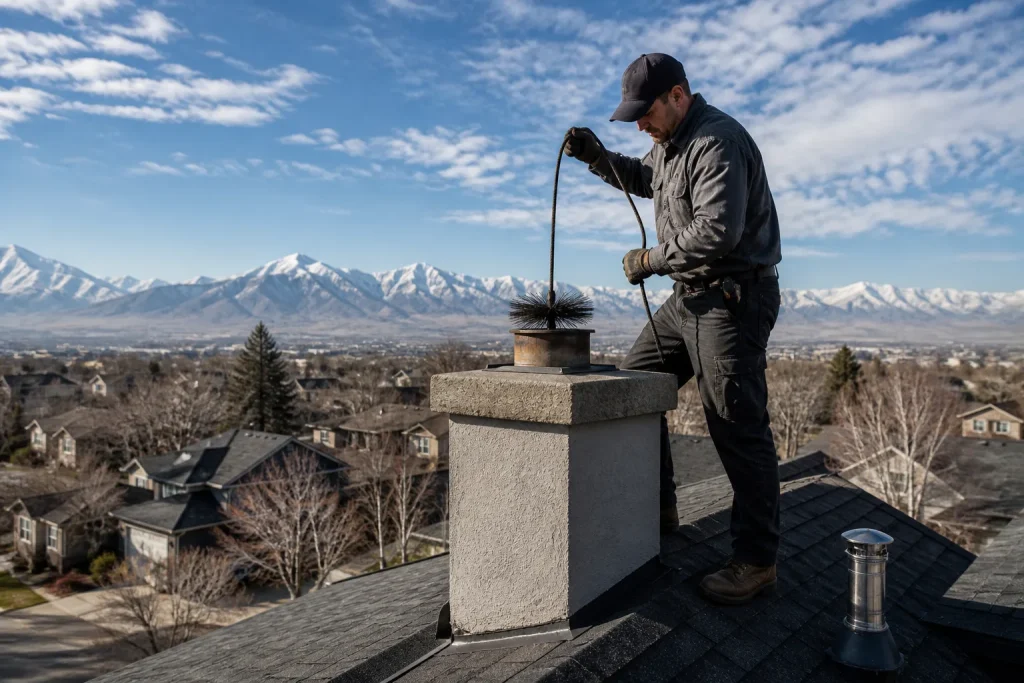
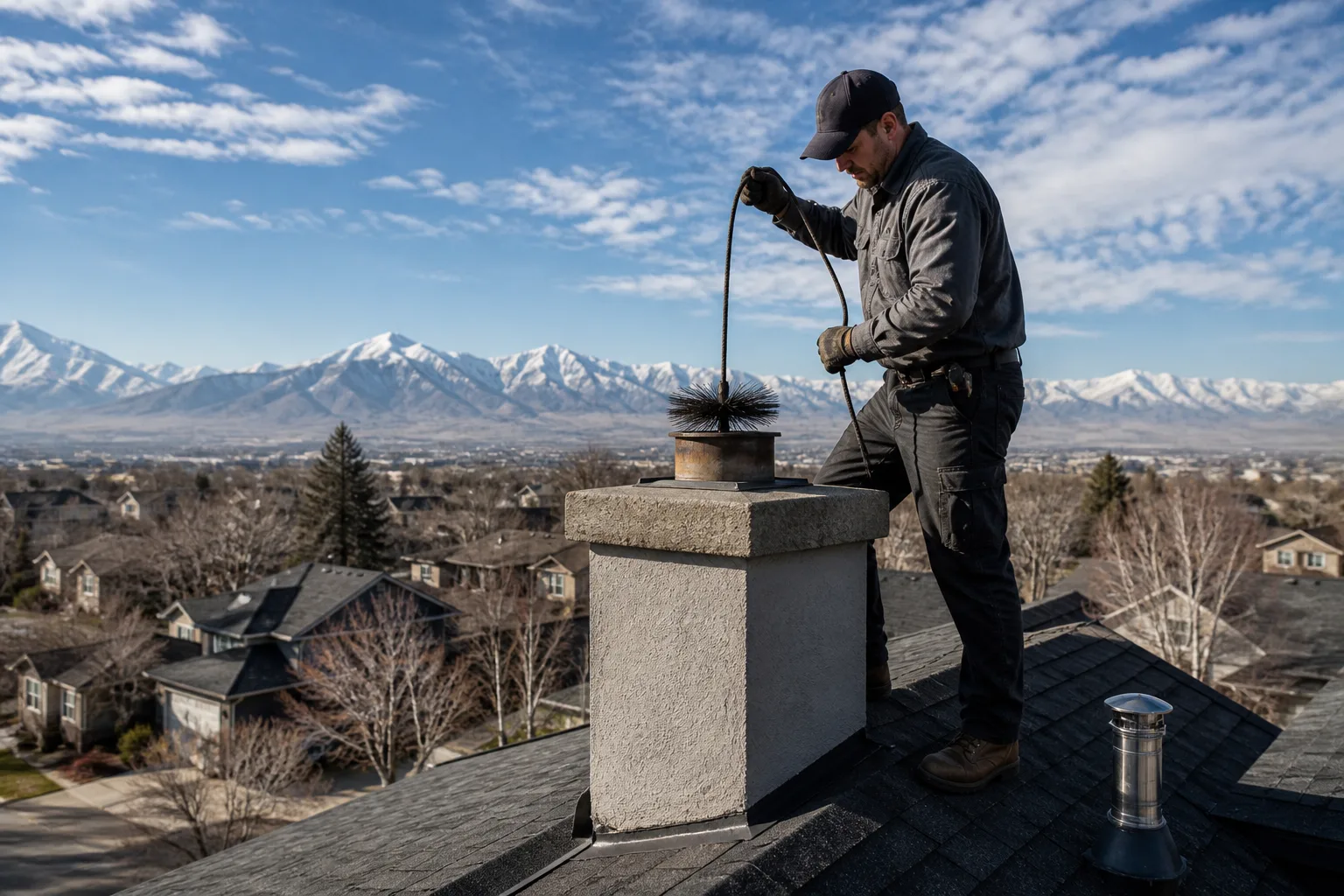
Top Signs You Need Chimney Cleaning Service – Don’t Ignore These
The sign homeowners most often ignore isn’t a smell or a sound. It’s the absence of trouble: a fire that catches fast, burns hot, and seems to be doing everything right. In our experience, a firebox that runs unusually hot and fuel-hungry can be sitting under glazed creosote, the most flammable stage of buildup there is. Here’s what actually matters, ranked by fire risk rather than by how obvious it looks.
If you’d rather not climb around on the roof chasing answers, call (844) 443-4875. We answer 24/7. Fast dispatch from 7am to 7pm, Sunday through Friday.
Why the Standard Warning Sign List Misses the Worst Problem
Most checklists tell you to watch for an oily smell, a sluggish fire, or smoke spilling into the room. Those are real signs, and you shouldn’t dismiss them. But they all point to moderate problems: soot loading, a soot-and-dust mix, or a draft issue. The genuinely dangerous condition, stage 3 glazed creosote, produces almost none of them.
Glazed creosote forms when creosote vapors condense and then get cooked repeatedly by hot fires. It hardens into a shiny, tarlike shell that looks like black glass or dark varnish, and it clings hard to the flue walls. From inside the firebox you can sometimes see the lower edge of it, especially looking up past the damper toward the smoke chamber: a glossy, reflective coating rather than the soft, matte soot you’d expect. That shine is the tell. It’s also fuel-rich, which means a stray ember or a hot enough flue gas can light it off.
A fire that burns “too well” is a related clue. If your wood seems to disappear faster than it used to and the firebox runs hotter than feels right, get the flue looked at before you light another fire. In Salt Lake City, where many homes burn hard through the cold months, we see glazed buildup more often than the occasional-use household would suggest.
How Salt Lake City’s Inversion Season Accelerates Creosote
Salt Lake City’s winter inversions trap cold air in the valley under a warmer layer, and that changes how people burn. When the air is thick and the days are gray, homeowners tend to damper the fire down to stretch the wood and cut smoke. A smoldering, low-oxygen fire is exactly the recipe for creosote: cooler flue gases, more unburned material, more condensation on the walls.
Compare that to a mild climate where a fireplace runs a few evenings a year. Here, the same flue can see months of steady, damped-down burning in a single season. That’s why our advice for Salt Lake City households is to treat the annual sweep as non-negotiable rather than optional, and to book it before burning season starts rather than after a problem shows up. Checking the flue in fall means you’re not discovering a heavy load of creosote in January when you want to be using the fireplace.
Creosote also builds differently depending on how you burn. Dry, seasoned wood and a hot, open fire leave less behind. Green or damp wood and a restricted air supply leave a lot. Neither approach makes the flue self-cleaning, though. A chimney sweep removes what’s accumulated so the next fire starts from a clean baseline.
Overdue for a Cleaning vs. Already Damaged: Know the Difference
Some signs mean “book a cleaning.” Others mean “stop and get an inspection first,” because cleaning alone won’t fix what’s going on. Sorting them correctly protects your home and your wallet.
Signs a cleaning is likely overdue:
- A soot layer roughly an eighth of an inch or thicker on the flue walls (a technician can measure it).
- An oily, campfire-like smell that lingers in the room even when the fireplace is cold.
- Smoke rolling back into the room when you first light a fire, or a draft that feels weak.
- Visible soot staining around the firebox opening or on the glass of a gas unit.
Signs damage may already exist:
- Glazed, tarlike creosote that won’t brush off with normal sweeping.
- Cracked or spalling flue tiles, or crumbling mortar joints.
- White staining on the chimney exterior, which can point to moisture getting in.
- A loose or missing cap, or a crown with visible cracks.
That second list is where a documented inspection matters. In our experience, homeowners worry most about being sold liner or masonry work they can’t verify. Our answer is simple: nothing gets recommended without camera evidence you can see for yourself, and we’ll tell you plainly when a repair can safely wait. If the flue has damage, cleaning without an inspection first can make it worse, so we check before we brush.
Animal Activity in the Flue: The Spring Trigger Homeowners Misread
In Salt Lake City’s spring months, birds and squirrels look for sheltered spots to nest, and an uncapped flue is a prime candidate. The trouble is that the clues get blamed on everything else. A scratching or fluttering sound in the chimney gets written off as wind. A faint musty odor in the room gets blamed on the weather. Debris on the roof or in the firebox gets dismissed as leaves.
What animal activity actually looks and sounds like:
- Scratching, rustling, or a soft flapping from inside the chimney, often louder in the morning.
- Twigs, grass, insulation, or feathers dropping into the firebox.
- A musty or ammonia-like smell in the room during warmer weather.
- Birds perching on the chimney top or flying in and out of it.
Nests are a cleaning trigger on their own. They block the flue, trap moisture, and create a fire hazard, and the material burns hot and fast. The longer-term fix is a proper cap. Our chimney cap & crown work closes off the opening so next spring’s wildlife looks elsewhere. That single upgrade prevents a whole category of repeat problems.
The Annual Use Threshold That Should Trigger an Inspection
Here’s a rule of thumb we’d like more homeowners to know: if you burn wood regularly, even a cord or so a season, treat every cleaning as a cleaning-plus-inspection. Cleaning removes what’s there. Inspection tells you what condition the flue is actually in, and those are two different jobs.
Practically, that means a sweep followed by a Level 1 inspection each year, with the findings documented. That documentation matters beyond safety. It gives you a record for insurance, it’s useful in a pre-sale or post-purchase situation, and it creates a baseline you can compare against year to year. A safe chimney is a documented chimney, and having photos and a written report on hand beats trying to remember what the flue looked like last winter.
Gas fireplace owners shouldn’t skip this either. Gas units don’t build creosote the way wood does, but they still collect debris, and their venting needs checking. The same annual rhythm applies: get it looked at before the season you rely on it most.
If the inspection turns up a deteriorated flue, relining may be the answer. We install DuraFlex flexible liner systems for exactly that situation, and for firebox resurfacing we use HeatShield, a patented resurfacing product many sweep-only operations don’t carry. Fixing it right the first time beats handing you off to a second contractor mid-project.
When to Call a Pro
Some of this you can check yourself: look up into the firebox with a flashlight, watch how the fire behaves, listen for sounds in the flue. What you shouldn’t do is climb the roof or reach into the flue. Creosote removal, flue inspection, and any repair work involve heights, sharp tools, and real fire risk, and a trained technician should handle it. A heavy glazed load in particular isn’t a homeowner job.
Call a pro if you see glazed creosote, notice cracked tiles or loose mortar, hear animals in the chimney, smell smoke in the room, or simply can’t remember the last time the flue was cleaned. Any of those is reason enough to get eyes on it.
Related services in Salt Lake City: we handle fireplace repair as well, so a single visit can cover cleaning, inspection, and a fix if the firebox or damper needs attention. Chimney specialists, not generalists: every service lives within the chimney trade, from the annual sweep to full structural repair, with professional-grade materials from brands like Famco and Copperfield properly installed.
The Bottom Line
The warning signs most lists lead with are worth watching, but they don’t cover the most dangerous condition. Glazed creosote hides behind a fire that seems to work well, and Salt Lake City’s inversion-season burning habits give it more chances to form. Sort what you’re seeing into “cleaning overdue” versus “damage likely,” and when in doubt, get a documented inspection rather than guessing. Our technicians have up to 15 years of experience, and we work with the full range of professional materials, including HeatShield resurfacing and DuraFlex liners, so cleaning, inspection, and repair stay with one qualified team.
If you’re in Salt Lake City and need help, Salt Lake City Chimney Sweep Pros offers free estimates. Call (844) 443-4875. We answer 24/7, with fast dispatch from 7am to 7pm, Sunday through Friday. A written estimate sets the price before any work begins, and every job includes a camera inspection and photo report so you can see what we see.
Frequently Asked Questions
Most wood-burning chimneys in Salt Lake City should be swept once a year, and more often if you burn heavily through the winter. Because inversion-season burning tends to be damped down, creosote accumulates faster here than in a mild climate with occasional use. Pair the cleaning with a Level 1 inspection each time. Call (844) 443-4875 to book a free estimate.
Stage 3 glazed creosote looks like a shiny, tarlike or glassy coating on the flue walls, often dark and reflective rather than soft and matte like ordinary soot. You can sometimes spot its lower edge looking up from the firebox past the damper. It’s the most flammable stage and doesn’t brush off with a normal sweep, so it needs professional attention. Call (844) 443-4875 for a free estimate.
Not necessarily. A fire that burns very hot and burns through wood unusually fast can be a warning sign of fuel-rich glazed creosote rather than proof of a healthy flue. If your fire has changed character, get the flue inspected before the next burn. Call (844) 443-4875 and we’ll take a look.
Skipping it lets creosote and debris keep building, raises the risk of a chimney fire, and can hide damage that gets more expensive to fix the longer it goes. Blocked or cracked flues can also affect how safely the fireplace vents. It’s a maintenance item, not a luxury, and the fix is usually simple when caught early. Call (844) 443-4875 for a free estimate.
Written by the team at Salt Lake City Chimney Sweep Pros.
Need Chimney Cleaning Help?
Call Salt Lake City Chimney Sweep Pros - the local pro we connect you with is licensed and insured, here with fast help in Salt Lake City.
(844) 443-4875